
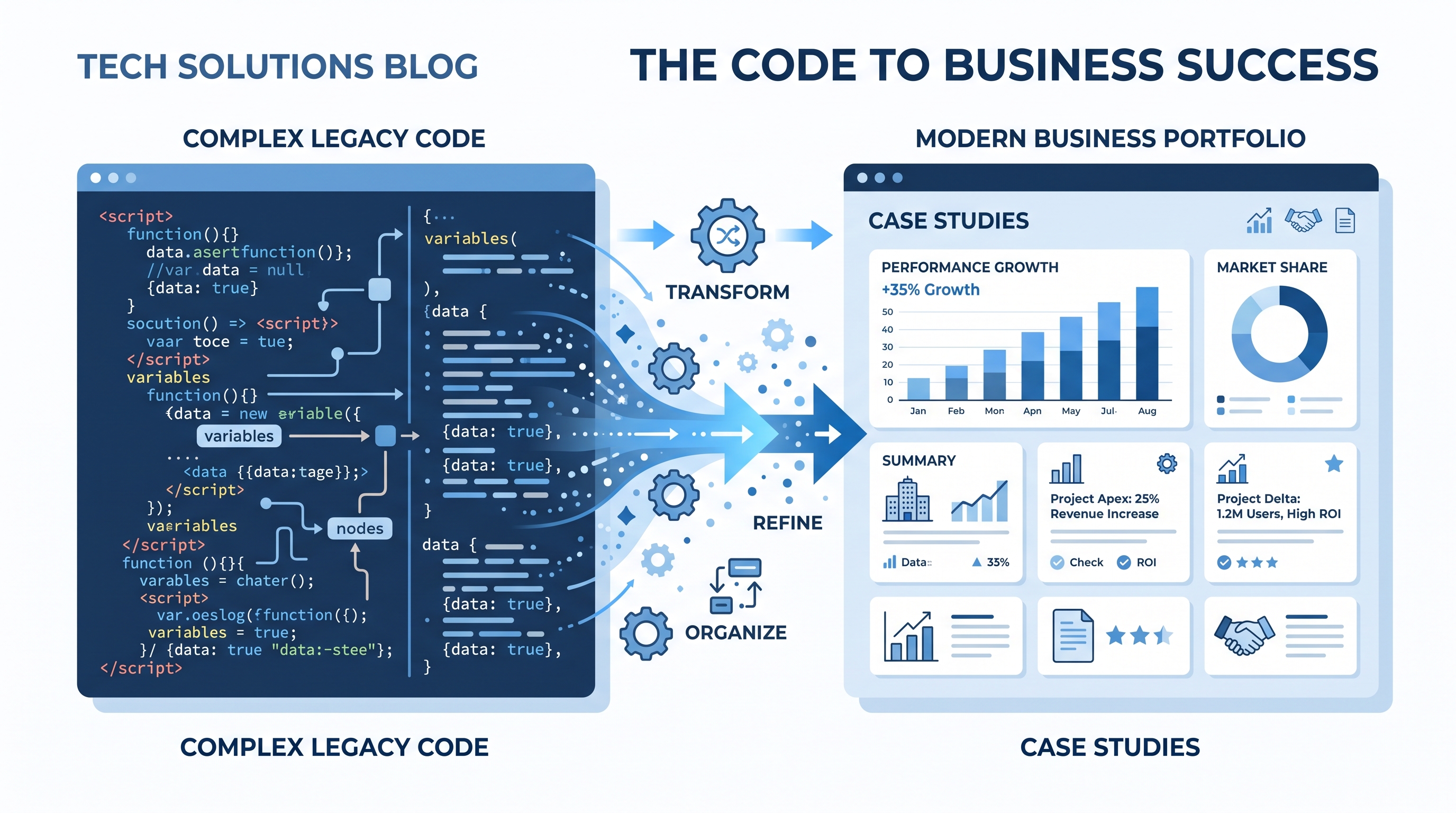
As developers and technical freelancers, we love showing off how we built things. We link clients to our GitHub repositories, proudly displaying our clean MVC architecture, our perfectly linted React components, and our clever CI/CD pipelines.
Here is the problem: Your client is a real estate broker, an e-commerce store owner, or a marketing director. They cannot read code.
When you send a non-technical client a GitHub link, you are speaking a foreign language. They don't care about your state management; they care about whether the app you build will make their business money.
The Anatomy of a High-Converting Portfolio
To win high-ticket clients, you must translate your technical achievements into business value. Your portfolio shouldn't be a list of repos; it should be a list of Case Studies.
Every project in your portfolio should answer three simple questions:
The Problem: What business issue was the client facing? (e.g., "The client's booking system was dropping 30% of reservations.")
The Solution: What did you do? (e.g., "I built a custom Laravel API integrating Stripe and a React frontend.")
The Impact: What was the business result? (e.g., "Increased successful bookings by 45% in the first month.")
Build Your Public Portfolio Instantly
Translating technical projects into business case studies is exhausting, which is why most freelancers skip it.
With Prozilio, it happens automatically. When you import your work history, our AI extracts the core value of what you built and formats it into a sleek, public-facing portfolio page (prozilio.com/p/yourname).
You get a beautiful, client-ready showcase of your best work—without having to write a single line of frontend code or marketing copy.